
Failure has a way of stripping away the version of ourselves we present to the world.
When everything is going well, it is easy to believe we are disciplined, independent, resilient, and determined. It is easy to talk about our goals when the bills are paid, the relationship feels secure, the job is tolerable, and someone is standing nearby to catch us.
But when life knocks us down, the truth begins to surface.
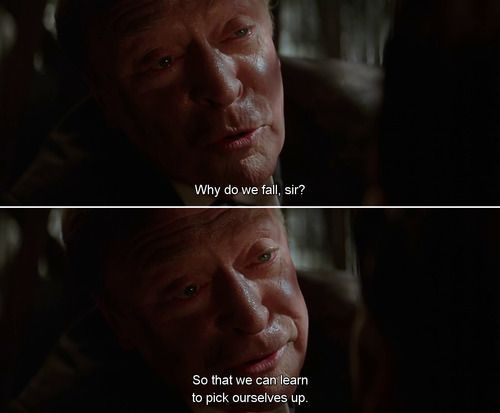
Why do we fall?
So we can learn how to pick ourselves back up.
The fall is not what defines us. What matters is what we decide to do after we hit the ground.
That decision is where growth begins.
- Do we remain there and wait for someone else to rescue us?
- Do we continue depending on the hard work, money, patience, or sacrifice of the people around us?
- Or do we finally decide that it is time to take responsibility for where our lives go next?
Failure Introduces You to Yourself
Failure can reveal parts of us that success keeps hidden.
It shows us how we respond when our plans fall apart. It exposes the habits we have been avoiding, the excuses we have been repeating, and the responsibilities we have been postponing.
A financial crisis may reveal years of uncontrolled spending.
A broken relationship may reveal boundaries we were afraid to establish.
A miserable job may reveal how long we have allowed fear to keep us from pursuing something better.
A missed opportunity may reveal that we were waiting for motivation instead of developing discipline.
These realizations can hurt. But discomfort is not always the enemy. Sometimes discomfort is the warning light telling us that something must change.
Failure does not automatically make us stronger. We become stronger when we are willing to examine what happened, accept our part in it, and change how we move forward.
The lesson is not simply that we survived.
The lesson is that we cannot continue living the same way and expect a different future.

Support Is a Blessing—But It Cannot Become a Lifestyle
There is nothing wrong with receiving help.
Most of us would not be where we are today without someone giving us advice, lending us money, opening a door, offering encouragement, or providing a temporary place to land. Families, friends, mentors, and partners are supposed to support one another.
A safety net can prevent a difficult season from becoming a permanent disaster.
But a safety net is meant to catch us—not become the place where we choose to live.
There is a difference between receiving help while rebuilding and expecting other people to continually carry responsibilities that belong to us.
Eventually, we must ask ourselves some uncomfortable questions:
- Am I using this support to become stronger, or am I using it to avoid changing?
- Am I building a plan to stand independently, or am I assuming someone will always protect me from the consequences of my decisions?
- Am I respecting the sacrifices people have made for me by improving my life, or am I allowing their hard work to fund the same destructive cycle?
Real gratitude is not only saying thank you.
Real gratitude is using the opportunity someone gave us to build a better future.
Getting Out of Debt Is About More Than Money
Debt is often discussed as a mathematical problem, but it can also become an emotional and behavioral trap.
High-interest debt does not only take money from our future.
It takes options.
It can keep us trapped in jobs we hate because we cannot afford to leave. It can delay marriage, homeownership, travel, investing, and starting a family. It can make every unexpected expense feel like an emergency.
Sometimes debt begins with a genuine crisis. Other times it grows through impulse purchases, lifestyle inflation, repeated consolidation loans, or the belief that our future income will eventually solve today’s decisions.
But there comes a point when we must stop explaining the debt and begin eliminating it.
That means facing the numbers without hiding.
It means cutting expenses that no longer serve us.
It means selling things we do not need.
It means stopping the search for a miraculous investment that will erase years of poor decisions.
It means building a budget, creating a repayment strategy, and consistently following it—even when progress feels slow.
Getting out of debt is not punishment for the person we used to be.
It is protection for the person we are trying to become.
Every balance paid off restores a piece of our freedom. Every unnecessary expense eliminated gives our future another chance. Every month of disciplined progress proves that our past decisions no longer control us.
Stop Waiting for the Perfect Job to Find You
A bad job can drain more than our energy.
It can weaken our confidence, limit our income, damage our health, and convince us that we should be grateful simply to have employment—even when we know we are capable of more.
That does not mean we should impulsively quit without a plan. Responsibility means preparing for the transition rather than creating another crisis.
But staying somewhere forever because change feels frightening is not stability. Sometimes it is surrender disguised as security.
Moving toward better work may require us to:
- Learn a new skill after hours.
- Earn a certification.
- Update our résumé.
- Apply for opportunities before we feel completely ready.
- Ask for more responsibility.
- Build relationships with people who can help us grow.
- Accept a temporary inconvenience for a stronger long-term future.
The goal is not to run from every difficult workday. Every career will include pressure, frustration, and imperfect leadership.
The goal is to recognize when a position has stopped challenging us to grow and has started convincing us to shrink.
A better career rarely arrives through wishful thinking. It is built through preparation, consistency, courage, and the willingness to take the next reasonable step.
Love Should Not Require You to Abandon Yourself
Relationships can also become places where we hide from necessary change.
We may remain in unhealthy situations because we fear loneliness. We may keep accepting disrespect because we are attached to someone’s potential. We may confuse familiarity with love and sacrifice with self-erasure.
Not every struggling relationship is a bad relationship. Healthy love still requires patience, forgiveness, communication, and work.
But love should not require one person to carry the entire relationship while the other refuses accountability.
It should not require us to constantly betray our values, ignore our boundaries, or abandon the future we are trying to build.
Sometimes stepping up means becoming a better partner.
It means healing our own wounds instead of making someone else responsible for them. It means communicating clearly, becoming financially responsible, keeping our promises, and learning how to love without manipulation or dependency.
Other times, stepping up means recognizing that a relationship is preventing both people from becoming healthier.
Leaving can be painful. Staying can also be painful.
The real question is whether the pain is producing growth—or simply repeating the same damage.
We should pursue a love that feels safe enough for honesty, strong enough for accountability, and mature enough to support the future both people say they want.
Nobody Is Coming to Live Your Life for You
At some point, we must accept a difficult but empowering truth:
No one else can perform our transformation for us.
Someone can give us money, but they cannot create our financial discipline.
Someone can recommend us for a job, but they cannot build our skills.
Someone can love us deeply, but they cannot heal every insecurity we refuse to confront.
Someone can give us another opportunity, but they cannot force us to use it wisely.
The people who care about us can walk beside us. They can encourage us, advise us, and help us during the hardest seasons.
But they cannot take our steps for us.
We have to decide whether we are going to remain dependent on rescue or become responsible for progress.
That does not mean doing everything alone. Independence is not isolation. Strong people still ask for help.
The difference is that they use help as a bridge – not a permanent destination.
Picking Yourself Up Usually Looks Ordinary
We often imagine transformation as one dramatic moment.
A sudden promotion.
A winning investment.
A perfect relationship.
A life-changing opportunity.
But most people do not rebuild their lives through one extraordinary breakthrough.
They do it through hundreds of ordinary decisions.
They wake up and go to work.
They follow the budget.
They make the payment.
They submit the application.
They attend the appointment.
They have the uncomfortable conversation.
They say no to something that would pull them backward.
They start again after slipping.
Picking yourself up is rarely glamorous. It may happen quietly while nobody is watching. There may be no applause when you cancel the purchase, complete the course, leave the unhealthy situation, or make another debt payment.
But those quiet decisions are changing your direction.
You do not need to repair your entire life today.
You need to make the next decision that agrees with the future you say you want.
The Fall Can Become the Foundation
Your failures do not have to become permanent labels.
Being in debt does not mean you will always be irresponsible.
Choosing the wrong job does not mean you cannot build a meaningful career.
Remaining too long in a bad relationship does not mean you are unworthy of healthy love.
Depending too heavily on others does not mean you cannot learn to stand on your own.
Your past explains some of your current circumstances, but it does not have the authority to determine your final destination.
The fall may have embarrassed you. It may have cost you money, time, relationships, opportunities, or confidence.
But it can also become the moment when you finally stop drifting.
It can become the reason you build a budget.
The reason you establish boundaries.
The reason you take your health seriously.
The reason you improve your career.
The reason you become someone your future family can depend on.
Failure can either become an excuse to remain the same or a foundation upon which you build something stronger.
That choice belongs to you.
Don’t Stay Down. Level Up
Next Level Living is not about pretending that life is easy.
It is not about becoming perfect, wealthy, successful, or emotionally healed overnight.
It is about refusing to stay where life knocked you down.
It is about appreciating the people who helped you without expecting them to carry you forever.
It is about paying off the debt that has been stealing your future.
It is about preparing yourself for better opportunities instead of endlessly complaining about the ones you have.
It is about walking away from patterns, environments, and relationships that keep pulling you backward.
Most importantly, it is about becoming the kind of person who can responsibly handle the life, freedom, success, and love you say you want.
So ask yourself:
When life reveals who I am, will I make excuses—or make changes?
Will I keep waiting to be rescued—or begin rebuilding?
Will I use my failures as proof that I cannot succeed—or as lessons that teach me how?
We all fall.
The next level begins when we decide not to stay down.
 Next Level Living
You must be logged in to post a comment.