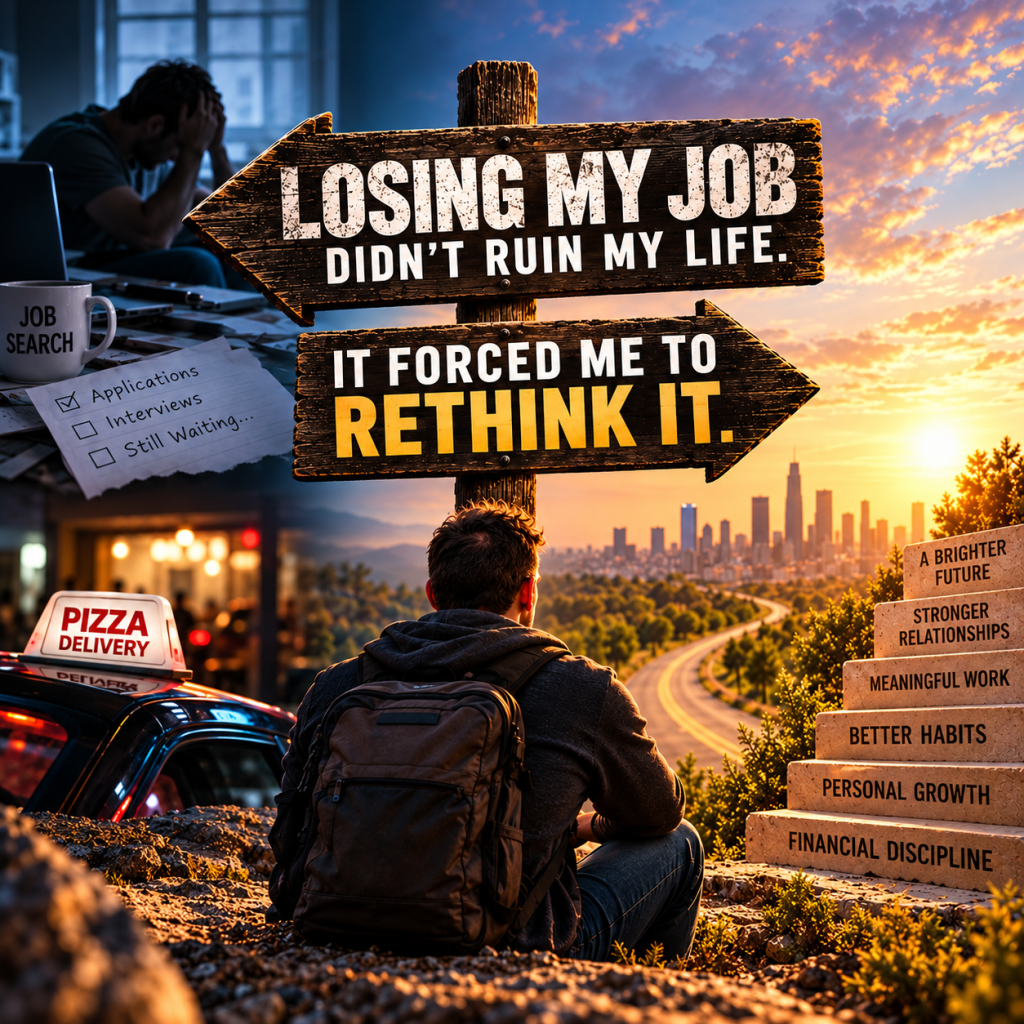
How career setbacks, financial mistakes, and second chances taught me what it really means to build a better life.
There are moments in life when someone you love receives news that changes everything.
They lose their job. Their financial security suddenly feels uncertain. Their confidence takes a hit. And the future they thought they were building becomes a little harder to see.
When that happens, our first instinct is often to fix things.
We want to offer solutions, find opportunities, make phone calls, and reassure them that everything will work out.
But sometimes, the most meaningful thing you can do is simply remind them:
I’m here. I believe in you. And I’m not going to abandon you because life just got difficult.

Recently, someone I love experienced a career setback. Watching them navigate the disappointment brought back memories of a time when I was the one who had lost my job, my confidence, and, for a while, my sense of direction.
It reminded me how far I’ve come, how many mistakes I’ve made, and how differently I see success today.
And perhaps most importantly, it reminded me why I started Next Level Living in the first place.
Because building a better life isn’t about pretending we have everything figured out.
It’s about learning from where we’ve been, taking responsibility for where we are, and refusing to give up on where we could go.
The Degree That Was Supposed to Open Doors
Years ago, I spent a significant part of my life working toward a bachelor’s degree in Business Information Systems.
I’ve always described the degree as half business and half computer science.
I enjoyed technology, solving problems, understanding how systems worked, and figuring out how to make processes more efficient.
Like many college graduates, I had expectations about what life would look like once I finished school.
Get the degree. Find a good job. Make more money. Build a career.
Simple enough, right?
After graduation, I found part-time work building websites. It was something related to my education, and I enjoyed being able to apply what I’d learned.
Unfortunately, the pay wasn’t great, and the position didn’t offer the health insurance or financial stability I needed.
So I started looking elsewhere.
Eventually, I accepted a position with a logistics company. The job description mentioned e-commerce, which caught my attention.
I thought I was stepping into something that would combine technology, business, and the rapidly growing world of online shopping.
The reality was a little different.
My job involved reviewing eBay listings and assigning Harmonized System (HS) tariff codes to products being exported from the United States to other countries.
It wasn’t exactly what I imagined doing with my degree.
The expectation was to process around 200 listings per week.
I was completing at least 200 per day.
I worked hard, learned the business, and eventually earned a promotion.
At the time, I didn’t think the pay was particularly impressive. Looking back, though, I had something incredibly valuable that I didn’t fully appreciate.
My expenses were low.
I was living with my parents, and I had an opportunity to build savings and establish strong financial habits before taking on more responsibilities.
Eventually, my promotion allowed me to move into my own apartment, pay my own bills, and experience a greater sense of independence.
But I still felt like something was missing.
I had earned this degree. Shouldn’t I be doing something more directly related to it?
That question eventually led me to leave.
Chasing More Money and What I Thought Was a Better Career
I accepted a contract-to-hire opportunity through a staffing agency, working for another logistics company.
This time, I was doing application development and help desk support at a warehouse.
Finally, I thought, I was doing the kind of work I had gone to school for.
And the money?
It was significantly better.
I was earning approximately $8 more per hour, working plenty of overtime, and occasionally working a seventh day at double-time pay of around $40 per hour.
I was making more money than I ever had before.
Surely this was the breakthrough I’d been waiting for.
Except there was one problem.
I was still living paycheck to paycheck.
My income had increased, but my financial discipline hadn’t.
Instead of using the additional money to build security, I allowed my lifestyle and spending habits to absorb much of it.
I was working longer hours and bringing home bigger paychecks without necessarily building a stronger financial foundation.
That’s a lesson I wish I’d understood much earlier:
Making more money doesn’t automatically make you financially successful.
If you don’t learn how to manage what you have, increasing your income can simply give you more opportunities to make expensive mistakes.
And then, after approximately 18 months, everything changed.
I had helped train someone who was a full-time salaried employee.
Eventually, the company no longer needed my contract position.
Just like that, I was unemployed.

Six Months of Unemployment — and the Truth I Didn’t Want to Admit
Losing that job was humbling.
I had spent years earning a degree, gaining experience, and trying to advance my career.
Now I was sitting at home wondering what I was supposed to do next.
I told myself I was looking for work.
And technically, I was.
I submitted applications, reviewed job postings, and searched for positions that matched what I wanted to do.
But looking back, I can admit something I struggled to recognize at the time.
I was being selective when I couldn’t afford to be selective.
I wanted another opportunity that paid well and aligned with my degree.
I didn’t want to accept that I might need to take a step backward financially to keep moving forward in life.
And beneath all those job applications was something else.
Depression. Disappointment. A loss of confidence.
I had attached so much of my identity to my career that losing my job made me question my own value.
Weeks turned into months.
My savings slowly disappeared.
And I kept waiting for the right opportunity rather than pursuing every reasonable way to bring money back into my household.
Now, I want to be careful here.
Not everyone who struggles to find work is being too selective. Job markets can be difficult, health issues can complicate employment, and some people apply to hundreds of positions without receiving an offer.
I also understand that depression can make even ordinary tasks feel overwhelming.
But in my situation, I eventually had to acknowledge that I wasn’t doing everything I could to improve my circumstances.
I was waiting for my life to return to what it had been.
When what I really needed was to start rebuilding it.
Delivering Pizzas Wasn’t Failure. It Was a Turning Point.
After roughly six months of unemployment, I finally took a job delivering pizzas.
It wasn’t glamorous.
It wasn’t what I had gone to college for.
And it certainly wasn’t what I’d imagined doing after earning more money than ever before.
But it was work.
It was income.
And it was a step forward.
For the first time in months, I was doing something practical to change my situation rather than waiting for the perfect opportunity.
I only delivered pizzas for a couple of weeks.
Then something unexpected happened.
One of my closest friends learned about my situation and helped me get rehired by the logistics company I’d previously left.
The very company I had walked away from because I thought I needed something better.
Life has an interesting way of teaching us humility.
And sometimes, the door we need isn’t a brand-new one.
Sometimes it’s a door we once closed ourselves.
Returning to the Company I Once Left
When I returned, I had a different perspective.
I wasn’t coming back because I’d abandoned my ambition.
I was coming back because I’d learned that ambition without patience, discipline, and responsibility could lead me right back to where I’d started.
Instead of viewing the job as something beneath my education, I began looking for ways to use my education to become better at the job.
I learned the operations.
I developed subject matter expertise.
I used my technical background to solve problems, improve processes, and help others work more effectively.
I discovered something important about the relationship between education and career development.
Your degree doesn’t have to define your job title for your education to have value.
Business knowledge, technology skills, critical thinking, and problem-solving can make you valuable in places you never expected.
And gradually, I began building a career.
Not by chasing the next opportunity every time I became frustrated, but by becoming someone capable of creating value where I was.
That doesn’t mean staying at the same company is always the right decision. Sometimes changing employers is exactly what someone needs to grow.
For me, however, returning was the opportunity I needed.
And I wasn’t about to waste it.
The Career Was Improving, but I Still Had Lessons to Learn
I wish I could tell you that returning to my former employer immediately transformed my life.
It didn’t.
I still had personal habits that needed attention.
There was a period when I struggled with arriving at work on time. Sometimes I was only a minute or two late, but those minutes added up.
Eventually, I received a written warning.
I nearly jeopardized the second chance I’d been given over something I could have taken greater responsibility for.
And financially, I continued making mistakes.
Over the years, I borrowed money, accumulated debt, made impulse purchases, and sometimes used consolidation loans without addressing the spending behaviors that created the debt in the first place.
I kept thinking that a higher paycheck, a new loan, or a little more financial breathing room would solve my problems.
But those weren’t permanent solutions.
I was trying to improve my circumstances without consistently changing my behavior.
Eventually, I reached a financial low point where I had to confront the reality of my decisions.
I couldn’t keep living as though tomorrow’s income would always solve today’s spending.
Something had to change.
And that something was me.

No More Shortcuts. Start Thinking Long-Term.
At some point, I made a decision.
I was going to stop chasing shortcuts.
I was going to start paying down debt, building better habits, and thinking about where I wanted my life to be five, ten, and twenty years into the future.
That meant making less exciting decisions.
Paying down balances instead of buying something new.
Tracking my spending instead of avoiding my bank account.
Learning the difference between something I wanted and something that actually improved my life.
Recognizing that a temporary financial sacrifice could create years of future freedom.
And understanding that high-interest debt can quietly consume the financial progress you’re working so hard to achieve.
I didn’t become financially disciplined overnight.
I’m still working toward becoming debt-free.
But there’s a major difference between where I was and where I am today.
I now have a plan.
I understand my obligations.
I’m more intentional about how I use my income.
And instead of assuming that earning more money will fix everything, I’m focused on building a financial foundation that can support the life I want.
That’s what financial progress looks like for me.
Not perfection.
Direction.
Eight Years Later, Success Looks Different
Today, more than eight years after returning to that company, I’m working at the Operations Advisor level.
I get to combine the business and technology skills I developed throughout my education and career.
I work on operational improvements, analyze problems, identify opportunities, and help develop solutions that make our organization more effective.
In many ways, I’m doing exactly the kind of work I hoped my degree would eventually allow me to do.
Just not along the path I originally imagined.
And perhaps the biggest change is how I approach work itself.
There was a time when I wanted every overtime opportunity available.
Twelve-hour days meant bigger paychecks.
Working more hours felt like getting ahead.
Today, I don’t measure my professional success by how long I can stay at work.
I focus on completing my responsibilities, delivering results, and creating meaningful value.
I still work hard.
But I’m no longer interested in sacrificing every available hour simply to earn more money.
Because I’ve learned something that took me years to understand.
Your career should help you build the life you want. It shouldn’t become the only life you have.
When Someone You Love Loses Their Job
Recently, I found myself on the other side of a situation I once knew all too well.
Someone I love lost their job.
And suddenly, I wasn’t the person facing unemployment.
I was the person trying to provide reassurance.
My first instinct was to help.
Look for opportunities. Consider other positions. Think about what comes next.
But then I remembered what it felt like when I was unemployed.
The embarrassment.
The uncertainty.
The fear of disappointing people.
The feeling that everyone else was moving forward while I was standing still.
And I realized that sometimes people don’t immediately need a solution.
Sometimes they need to know that losing a job doesn’t mean losing their worth.
They need to hear that someone still believes in them.
That they’re loved.
That they haven’t become a burden simply because life has become difficult.
And that they aren’t going to be abandoned when things stop going according to plan.
I can share what I learned from my own experience.
I can encourage someone not to spend months waiting for the perfect opportunity while their finances deteriorate.
I can remind them that temporary work doesn’t have to define their career.
I can help them explore opportunities, prepare for interviews, and recognize skills they might be overlooking.
But there’s something I cannot do.
I cannot make someone else’s decisions for them.
I cannot determine what they want from their career.
I cannot give them ambition, confidence, or purpose simply because I want those things for them.
Those are things each of us has to discover and develop.
And loving someone means recognizing that difference.
Support doesn’t mean taking over their life.
It means standing beside them while they find the courage to take their next step.
Love, Responsibility, and Building a Future Together
As I’ve gotten older, my priorities have changed.
I’m no longer focused exclusively on how much money I can make or how quickly I can climb the corporate ladder.
I’m thinking about marriage.
Family.
Financial security.
My health.
My relationships.
And eventually having a home where I can build a life with the person I love.
Those things require more than ambition.
They require consistency, communication, sacrifice, and a willingness to face difficult circumstances together.
There will be seasons when one person is doing better than the other.
There will be unexpected expenses, disappointments, career changes, and moments when plans have to be adjusted.
That’s life.
And I believe that part of building a lasting relationship is learning how to face those moments as a team.
But being a team doesn’t mean one person carries every responsibility.
It means both people remain committed to moving forward, even when their contributions look different.
Sometimes one person needs encouragement.
Sometimes the other needs patience.
And sometimes both need to sit down, acknowledge reality, and make a new plan.
For me, faith is part of that foundation.
I believe God can work through our difficult seasons, even when we don’t understand why we’re experiencing them.
But faith doesn’t eliminate the need for personal responsibility.
We still have to show up.
Make decisions.
Take action.
And do the work.
Five Lessons I’d Share With Anyone Starting Over
If you’ve lost your job, made financial mistakes, or feel like your life isn’t going where you expected, here are five things I wish I’d understood sooner.
1. Your job is something you do. It isn’t everything you are.
Losing employment can affect your confidence, but it doesn’t erase your education, experience, abilities, or potential.
2. Don’t let pride prevent you from earning an income.
There is dignity in honest work. A temporary job that pays your bills can be a bridge to something better. You don’t have to abandon your long-term career goals to accept short-term employment.
3. More money won’t automatically fix poor financial habits.
If you’re living paycheck to paycheck, examine where your money is going. Higher income helps, but lasting improvement usually requires intentional decisions about spending, saving, and debt.
4. Stop waiting for the perfect opportunity to begin improving your life.
Apply for the jobs you want, but remain open to reasonable opportunities that can help you move forward. Build skills, strengthen relationships, and take the next step available to you.
5. The people you love need encouragement, not just solutions.
When someone is struggling, don’t underestimate the value of showing up, listening, and reminding them that their circumstances don’t determine their worth.

What Does Next Level Living Really Mean?
When people hear the phrase Next Level Living, they might imagine making more money, buying a nicer house, getting promoted, or achieving financial independence.
And those can absolutely be worthwhile goals.
But that’s not the entire picture.
To me, Next Level Living is about becoming more intentional with the life you’ve been given.
It’s recognizing your mistakes without allowing them to define you.
It’s choosing discipline over temporary satisfaction.
It’s building financial stability so money becomes a tool rather than a constant source of anxiety.
It’s developing your skills, improving your health, strengthening your relationships, and investing in a future worth working toward.
It’s understanding that success isn’t always about reaching the next milestone faster.
Sometimes it’s about becoming the kind of person who can appreciate and sustain that milestone once you get there.
I spent years thinking that the next job, the next raise, or the next opportunity would finally make everything fall into place.
But the biggest changes in my life began when I stopped waiting for my circumstances to improve and started taking responsibility for what I could control.
I’m still learning.
I’m still paying off debt.
I’m still working toward the future I want.
And I’m certainly not claiming to have all the answers.
But I know this much:
You can lose your job without losing your future.
You can make financial mistakes without being destined to repeat them forever.
You can take a step backward in your career and still end up further ahead than you ever imagined.
And when someone you love is facing their own difficult chapter, you can be there to remind them that their story isn’t over.
Your Next Chapter Starts With One Decision
If you’re reading this while going through unemployment, financial hardship, or uncertainty about your future, I want you to remember something.
You don’t have to figure out the rest of your life today.
You don’t need the perfect job offer tomorrow.
You don’t need to eliminate every dollar of debt overnight.
And you don’t need to compare your progress with someone else’s.
But you do need to start somewhere.
Update your résumé.
Apply for another opportunity.
Take an honest look at your finances.
Reach out to someone you trust.
Learn a new skill.
Ask for help when you need it.
And if you’re struggling with depression or hopelessness, don’t convince yourself that you have to face it alone. Seeking support is an act of strength, too.
Small decisions, repeated consistently, can eventually create an entirely different life.
I know because I’ve lived it.
I once spent six months unemployed, slowly draining my savings, wondering what had happened to the career I thought I was building.
Today, I’m grateful for the second chance I received and for the lessons I learned along the way.
Not because everything worked out perfectly.
But because those experiences changed how I approach life.
Your setback doesn’t have to be your ending. It can be the beginning of the person you’re becoming.
And that, to me, is what Next Level Living is all about.
Next Level Living is about building a stronger future through financial responsibility, personal growth, meaningful relationships, and intentional decisions. Not overnight success. Not shortcuts. Just real progress, one decision at a time.
What setback in your life eventually taught you something valuable? Share your experience. Your story might be exactly what someone else needs to hear today.


You must be logged in to post a comment.