When I saw T-Mobile selling gasoline for $1.99 per gallon in Los Angeles while local prices were over $6, my first thought wasn’t about the promotion itself.
My first thought was:
“What happens when a company like Amazon decides to do this at scale?”
For decades, fuel has been treated as a commodity. Most drivers simply look for the lowest price, fill up, and move on. Loyalty exists, but it is usually tied to grocery rewards, warehouse memberships, or credit card points.
But what if the future of fuel isn’t about gas stations at all?
What if it’s about ecosystems?
The Amazon Evolution
Amazon has repeatedly entered industries by making life easier and cheaper for consumers.
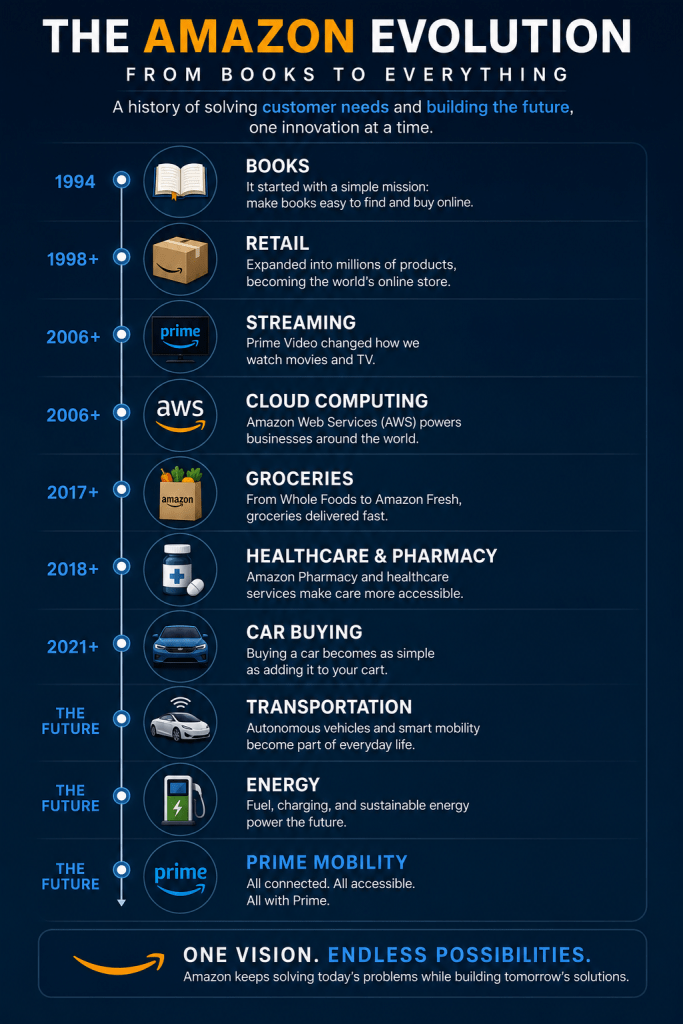
First it was books.
Then online retail.
Then streaming.
Then cloud computing.
Then groceries.
Then healthcare and pharmacy services.
Then car buying.
The company has consistently entered industries that many people assumed were already mature or impossible to disrupt. Rather than inventing entirely new markets, Amazon often simplifies the customer experience, bundles services together, and uses its massive ecosystem to create value that competitors struggle to match.
The company has built one of the largest subscription programs in the world through Amazon Prime. Millions of members pay annually because the benefits are so deeply integrated into their daily lives that canceling feels inconvenient.
Free shipping became streaming.
Streaming became gaming.
Gaming became pharmacy discounts.
Pharmacy became grocery savings.
Every new benefit strengthens the ecosystem.
Fuel could be the next logical step.
Introducing “Prime Gas”
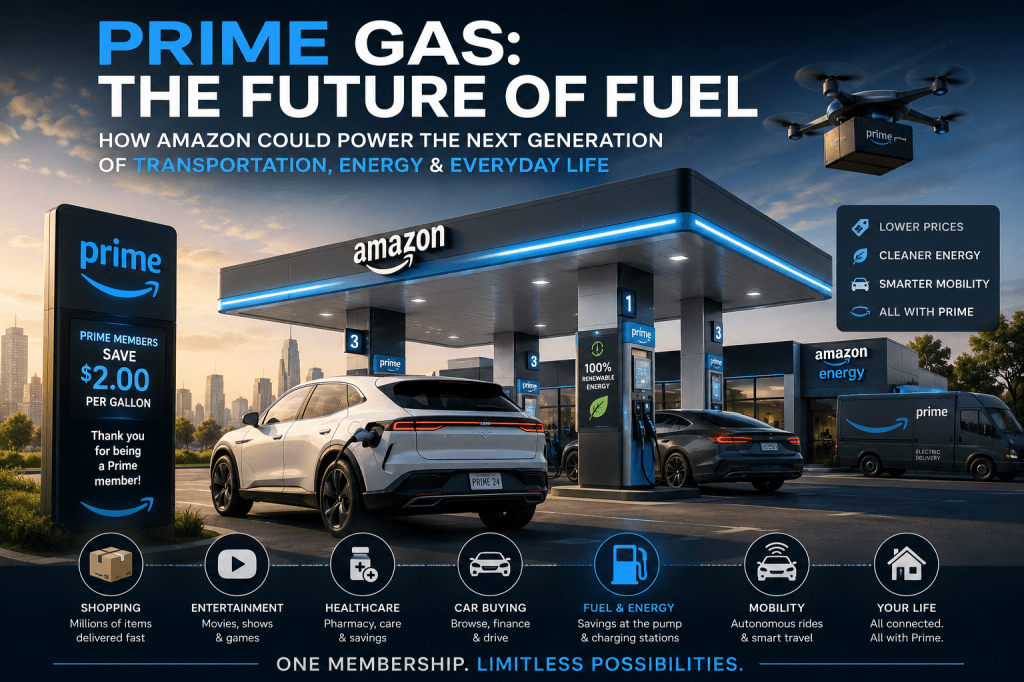
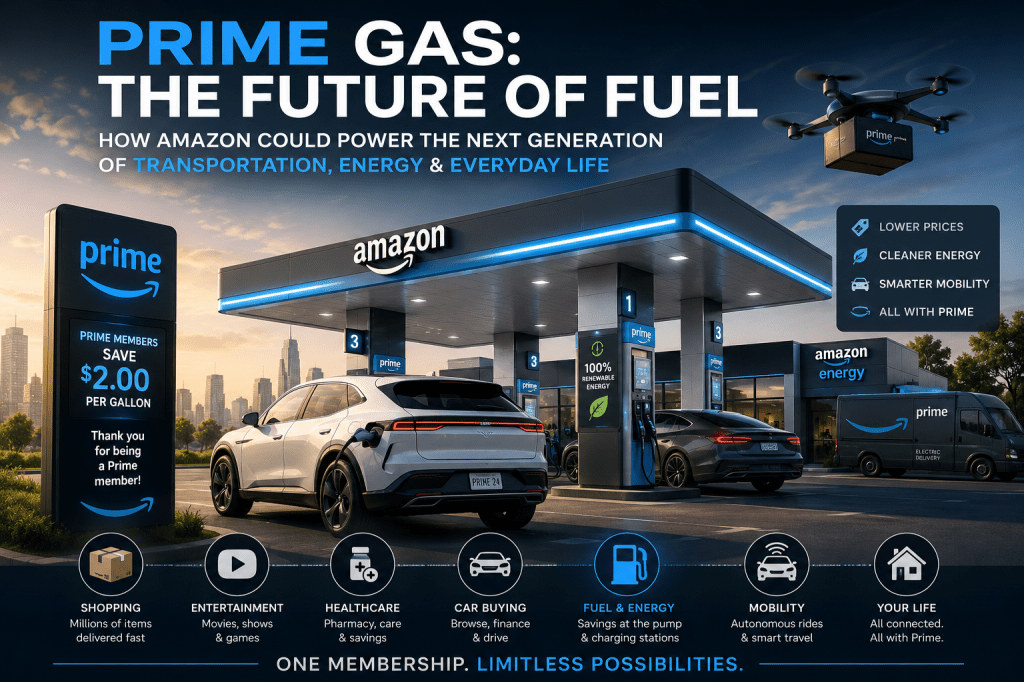
Imagine a future where Prime members pull into a station displaying a familiar Amazon logo.
A sign reads:
Prime Members Save $2 Per Gallon
The customer scans their Prime app and watches the price drop instantly.
The savings aren’t coming from the gas station itself.
They’re being subsidized by a company whose real goal isn’t selling fuel.
It’s keeping customers inside the Amazon ecosystem.
The same way Costco sells inexpensive hot dogs and discounted fuel, Amazon could view gasoline as a customer retention tool rather than a profit center.
Why This Could Work
Most businesses focus on maximizing profit per transaction.
Amazon focuses on maximizing lifetime customer value.
A customer who saves money on fuel may also:
– Renew Prime every year
– Shop more frequently
– Use Amazon Pharmacy
– Stream Prime Video
– Purchase smart home devices
– Subscribe to additional Amazon services
The fuel discount becomes marketing rather than an expense.
The company isn’t selling gas.
It’s selling loyalty.
Amazon’s move into car buying may be an early sign of something bigger.
Historically, consumers purchased transportation, fuel, maintenance, insurance, and financing from separate companies.
But what if those services eventually become part of a single ecosystem?
The Missing Piece: Mobility
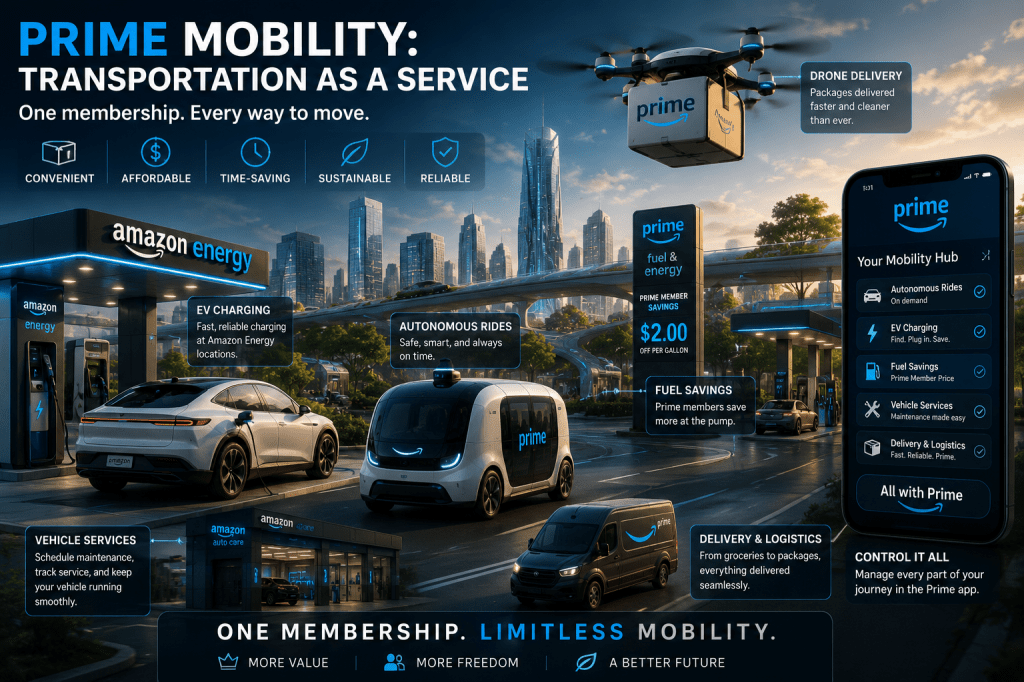
Imagine browsing vehicles on Amazon, financing them through an Amazon partner, insuring them through a Prime benefit, charging or fueling them at Amazon Energy locations, and scheduling maintenance through the same app you use to order groceries and watch movies.
What sounds futuristic today is often how disruption begins: one convenience at a time.
Beyond Gas Stations
The more interesting possibility may not be gasoline at all.
The automotive world is changing rapidly.
Electric vehicles continue to grow.
Autonomous driving technology is advancing.
Delivery networks are becoming increasingly automated.
In the future, transportation itself may become a subscription.
Imagine a service called Prime Mobility.
For a monthly fee, members receive:
– Autonomous transportation
– Grocery delivery
– Package delivery
– EV charging discounts
– Fuel discounts
– Entertainment services
– Smart home integration
Transportation becomes another utility service, similar to internet or electricity.
Instead of owning every aspect of travel, consumers simply subscribe.
Lessons From T-Mobile’s $1.99 Gas Promotion
T-Mobile’s promotion demonstrated something important.
People notice fuel prices.
Immediately!
Consumers may ignore dozens of advertisements every day, but a massive discount on something they purchase every week gets their attention.
That is why the promotion generated lines around the block.
It wasn’t just cheap gas.
It was a glimpse into how powerful recurring consumer savings can be when attached to a membership ecosystem.
The “Prime” Ecosystem
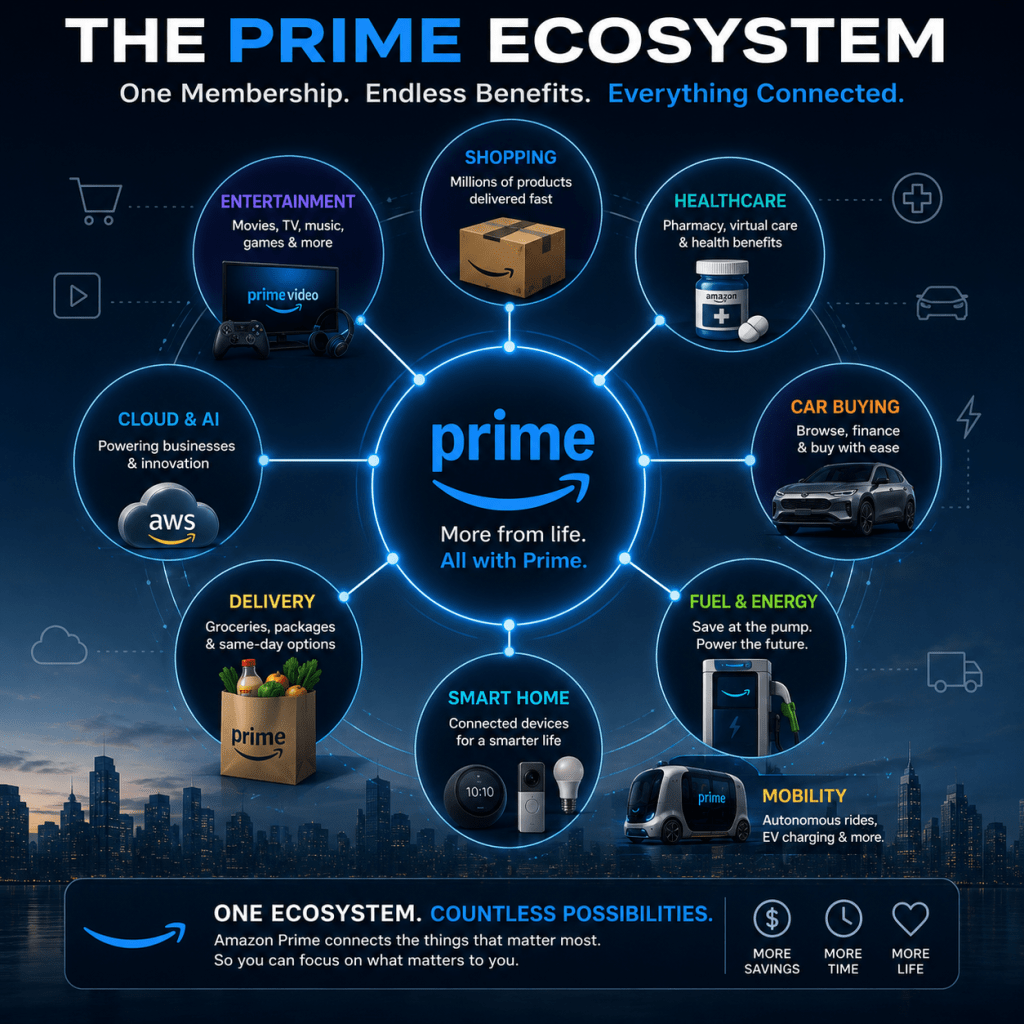
The future may belong to companies that successfully combine multiple parts of everyday life into a single subscription.
Amazon has already done this with shopping, entertainment, healthcare, and delivery.
Tomorrow it could include transportation and energy.
Will Amazon launch Prime Gas?
Maybe.
Maybe not.
But if someone eventually offers fuel, charging, transportation, delivery, entertainment, shopping, healthcare, and vehicle ownership under a single membership, it wouldn’t feel revolutionary.
It would simply be the next chapter in the subscription economy.
And if history has taught us anything, Amazon is rarely afraid to enter a market that everyone else assumes will never change.
The progression seems almost obvious when viewed together:
Books → Retail → Streaming → Cloud Computing → Groceries → Healthcare → Car Buying → Transportation → Energy → Mobility Subscription
Whether it happens in five years or twenty, the companies that win the future may not be the ones selling products.
They may be the ones selling ecosystems.
 Next Level Living
Leave a comment